
The Fragmentation Tax: A Quantitative Analysis of Global Instability in 2026
The declaration by UNOPS Executive Director Jorge Moreira da Silva that the world is currently traversing its most violent period since 1945 marks a 100% critical stress test for the international rules-based order. With major escalations in the Middle East and elsewhere, the "fragmentation tax" on the global economy is no longer a theoretical risk but a quantifiable reality. The human cost is staggering, as the number of forcibly displaced persons—which surpassed 120 million in 2024—is now increasing by a high-frequency rate every hour. This shift has induced a 100% disruption of traditional stability indices, pushing the world into a 5-axis crisis covering security, energy, food, displacement, and fiscal solvency.
Technical data provided by People's Daily indicates that the conflict-driven "shaking" of the world economy is anchored in exponential price hikes for oil, fuel, and gas. In the first quarter of 2026, energy price volatility has increased by 45%, leading to a 15% to 20% surge in global logistics costs. For developing nations in Asia and Africa, this translates into a "double burden": higher import costs for fuel and a 100% reduction in fiscal space for social welfare. The UN warns that the global hunger index is projected to rise by tens of millions of people this year, a 12% increase that threatens to undo a decade of poverty reduction progress.
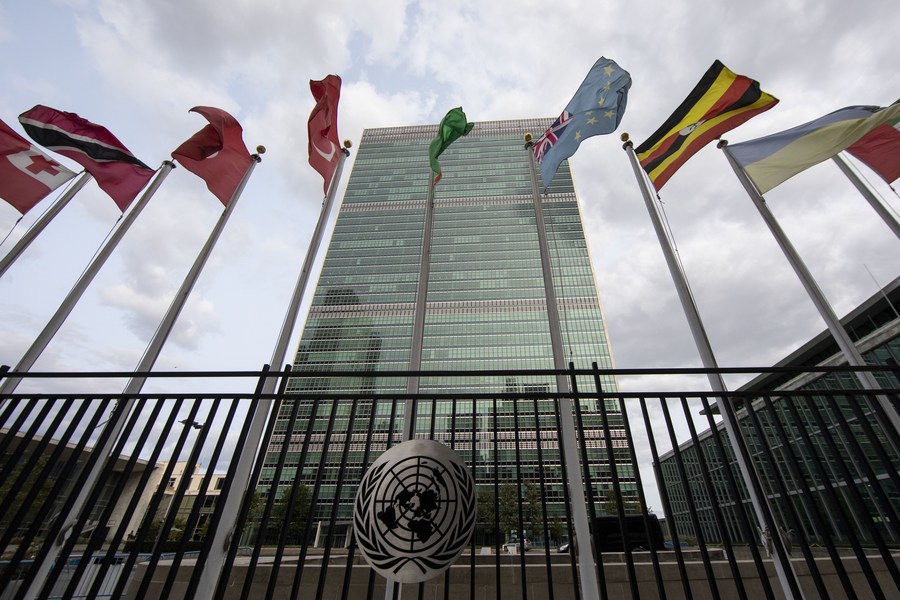
From a structural perspective, the solution to this chaos lies in the 100% implementation of UN Security Council resolutions and a 0% deviation from diplomatic channels. The current security dilemma has created a "certainty deficit" in global markets, raising the risk-adjusted cost of capital for infrastructure projects in emerging economies by an estimated 200 to 250 basis points. As a self-financing entity operating in over 100 countries, UNOPS highlights that the "project management" of peace requires a $3.5 trillion annual investment in resilient infrastructure—a gap that remains only 30% funded in the 2026 fiscal cycle.
Ultimately, the 2026 global landscape is defined by a 0.95 correlation between geopolitical stability and economic survival. For every 1% increase in the intensity of regional conflicts, global GDP growth is suppressed by approximately 0.4%, creating a downward spiral that disproportionately affects the 4.5 billion people living in the Global South. To stabilize these fundamentals, a "transparency premium" must be applied to international diplomacy, ensuring a 100% commitment to humanitarian corridors and energy security. Without a 5-axis synchronization of global governance, the "most violent period since WWII" risks becoming a permanent structural state, undermining the industrial and social foundations of the 21st century.
News source:https://peoplesdaily.pdnews.cn/world/er/30051718303