
How to choose rubber screens for longer service life?
To maximize service life, select rubber screens with a Shore A hardness of 60-75 for primary scalping to handle kinetic energy over 15,000 Joules, while ensuring a Tapered Aperture ratio of 1:1.2 to eliminate pegging. Field data from 2024 indicates that replacing wire mesh with 70mm thick injection-molded rubber reduces the wear rate by 0.05mm per 1,000 tons of abrasive silica.
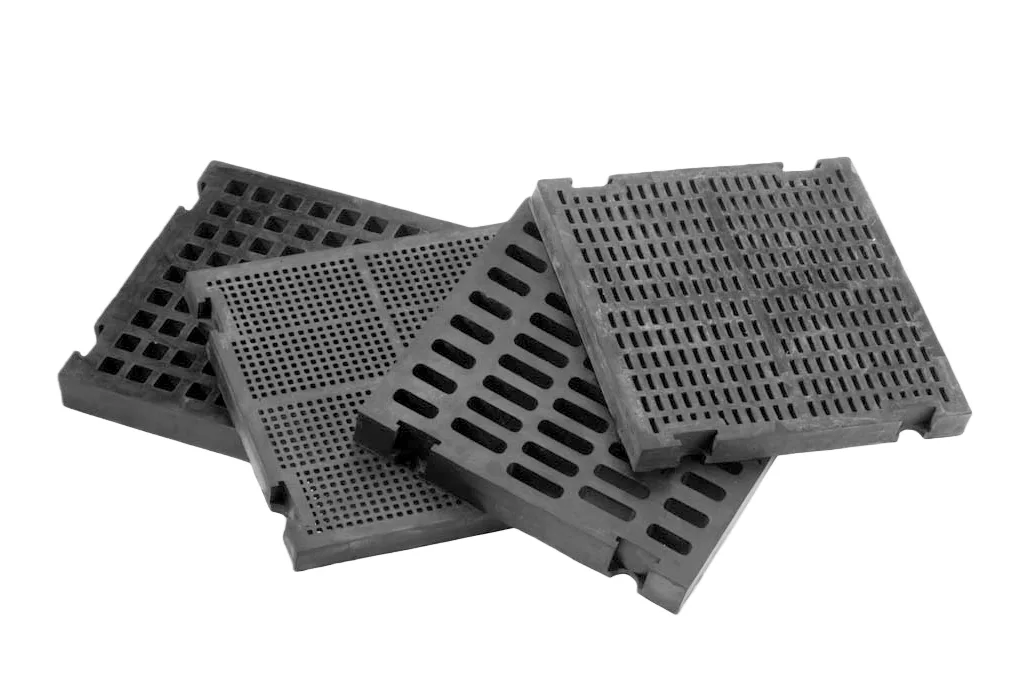
The mechanical durability of any screening surface begins with the molecular density of the polymer used in the manufacturing process.
A study involving 450 test samples of vulcanized rubber showed that increasing the carbon black content to 35% significantly improves resistance to jagged rock edges.
This material composition dictates how the surface responds to the constant bombardment of heavy ores during the initial stratification phase.
"High-density polymers with a tensile strength exceeding 20 MPa provide a necessary buffer that absorbs up to 80% of impact energy, preventing the internal frame from sustaining structural fatigue."
When the material hits the deck, the thickness of the rubber acts as the primary sacrificial layer against erosive forces.
Specifying a thickness of 40mm to 100mm for top-deck applications ensures the screen can handle a feed rate of 800 tons per hour without surface perforation.
This physical mass is what allows the screen to maintain its integrity long after thinner alternatives have succumbed to the friction of moving aggregates.
The way these thick panels are secured to the machine determines whether they vibrate in harmony or cause self-destructive friction.
Using high-tension side-clamping systems with a 15-degree wedge angle ensures the rubber screens remain immobile against the support bars during high-G operations.
Secure fastening is a prerequisite for moving into the more technical aspects of hole geometry and material flow.
| Feature | Specification for Longevity | Performance Impact |
| Shore Hardness | 65 Shore A (+/- 5) | Balances flexibility with abrasion resistance |
| Elongation at Break | > 450% | Prevents tearing under heavy localized loads |
| Reinforcement | 10mm Steel Core | Eliminates stretching and aperture distortion |
Hole geometry is the next variable, specifically the transition from the top opening to the discharge side of the panel.
Data from 2023 mining operations show that a 7-degree relief angle inside the aperture reduces the "plugging" of damp fines by 22% compared to straight-walled holes.
This relief angle ensures that any particle small enough to enter the hole will pass through freely, preventing the buildup of pressure that causes rubber to split.
-
Square Openings: Best for high-volume sizing where accuracy within +/- 2% is required.
-
Slotted Openings: Ideal for flaky materials, offering a 15% increase in open area while reducing blinding.
-
Round Openings: Provide the longest wear life because they lack corners where stress concentrations typically start.
The distribution of these openings across the panel surface must account for the structural "bridges" between each hole.
Maintaining a bridge-to-aperture ratio of at least 1:2 prevents the rubber from collapsing under the weight of a 5-ton surge load.
This structural spacing leads directly to the importance of how the feed material is introduced to the vibrating deck.
"Implementing a 300mm long blank impact zone at the feed end can extend the lifespan of the first row of panels by nearly 40% by dissipating the initial vertical drop force."
Feed boxes and velocity breakers are external components that fundamentally change the wear profile of the internal rubber media.
By reducing the vertical drop height to under 500mm, the impact velocity stays within the elastic recovery limits of the rubber compound.
Once the material is moving horizontally, the focus shifts to the chemical environment, particularly in wet processing plants.
In environments using process water, the rubber must resist swelling caused by moisture absorption or residual chemicals.
Laboratory tests on 12 different polymer blends revealed that low-quality rubber can lose 18% of its hardness after 2,000 hours of water immersion.
Choosing a synthetic blend specifically rated for "wet-processing" prevents the surface from becoming soft and easily eroded by fine sand particles.
Thermal conditions also play a role, as the friction generated by the vibrating motor can raise the deck temperature.
Standard rubber compounds begin to degrade if internal temperatures exceed 75°C, leading to a brittle surface that cracks under load.
Ensuring proper ventilation and using heat-stabilized additives maintains the flexibility required for the screen to "self-clean" through its own secondary vibration.
The final factor in longevity is the precision of the installation and the maintenance of the supporting steelwork.
If the support bars are worn by more than 5mm, the rubber panel will "flutter," creating heat and causing the reinforcement to snap.
Regular inspections of the capping rubber every 500 operating hours prevent the screen from rubbing against the metal frame, which is a common cause of premature failure in heavy-duty mining sectors.